A Rainy Market Visit with One Dry Place to Pause
Plan a rainy market visit around one dry place to pause, so you can browse comfortably, manage purchases, and change pace without rushing.

A dry place to set down your bags can make a rainy market visit easier to manage. Choose a café, covered hall, or sheltered seating area near the stalls, then use it to sort purchases and decide how much more you want to carry.
Find a pause point that suits your bags
Look for a covered place with room to stop comfortably, not just a roof that keeps rain off your head. A café inside the market, a public hall with seating, or a covered food court may work. A narrow doorway or a windy passage is a poor fit if you need to rearrange bags.
Check the market’s current layout and opening information before leaving. Confirm that the place is open during your visit and that you can bring purchases inside. If seating is limited or intended for diners, follow the venue’s rules and avoid occupying a table while carrying out unrelated shopping.
Think of the pause point as a workbench: it gives you a stable place to arrange what you have bought before deciding what to add.
Protect purchases from rain and crushing
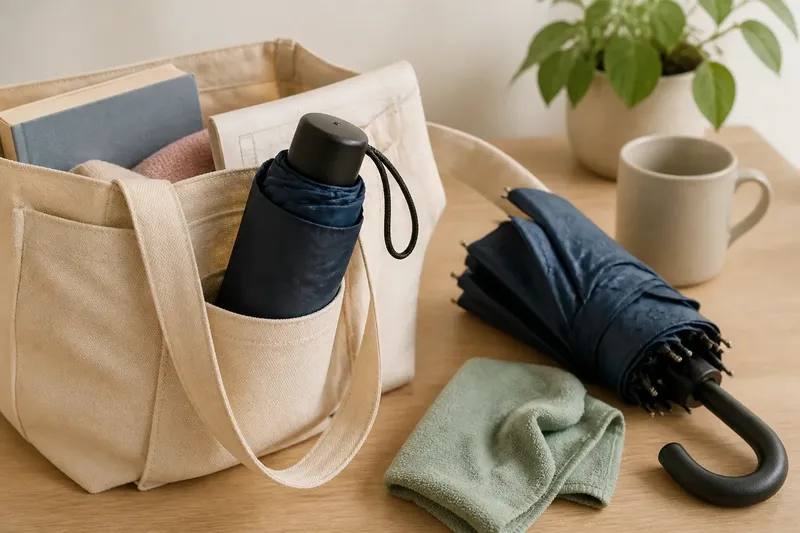
Bring a reusable tote that closes or folds over, with enough room for the items you expect to buy. An open basket can collect drips, while a paper bag may soften in rain. Keep delicate food and paper-wrapped goods apart from damp outerwear, and avoid stacking heavier purchases on top of fragile ones.
Ask a stallholder how their wrapping will hold up for your trip to the covered area or home. They can explain what they offer; you can decide whether it suits the weather and your carrying needs. If a purchase needs special handling, keep it separate and avoid placing it on a wet seat or floor.
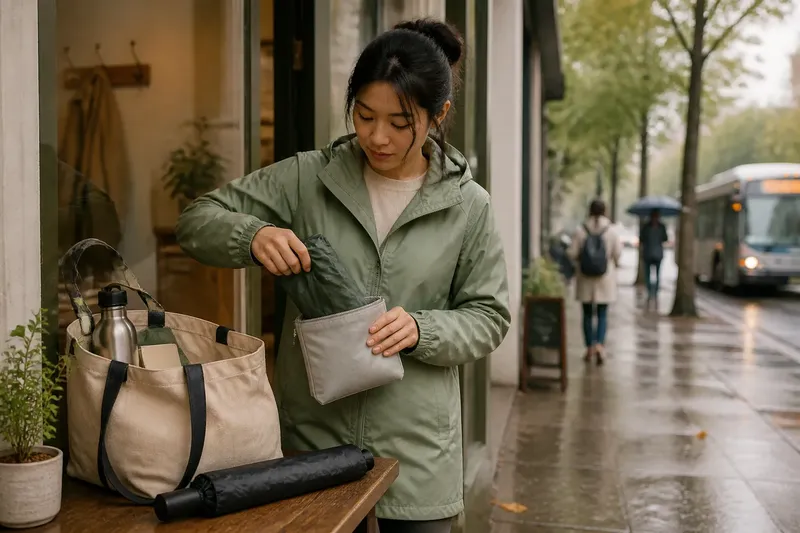
At your pause point, set bags down only where permitted and check that nothing is leaking, crushed, or getting damp. Move items into a more comfortable arrangement. If the market offers a staffed information desk or shopping storage, ask about its actual arrangements rather than leaving bags unattended.
Use a short routine to decide what to carry next
Make the pause useful by checking three things: what is already in your hands, whether any item needs extra care, and whether another purchase will make the return journey awkward. This keeps the focus on the practical details of market shopping, not on completing every aisle.
- Check whether a bag feels unstable or hard to hold; if it does, redistribute the load or stop shopping, and if it does not, keep browsing at a comfortable pace.
- Check whether food or paper wrapping is damp; if it is, separate it and ask the stallholder about suitable wrapping, and if it is dry, keep it away from wet clothing.
- Check whether a fragile item is pressed against heavier goods; if it is, move it into a protected space or carry it separately, and if it is not, leave the arrangement as it is.
- Check whether your tote still closes securely; if it does not, fold it over or use another suitable bag, and if it does, keep the opening protected from drips.
- Check whether the next purchase will fit without crushing what you already have; if it will not, skip it or ask about a suitable way to carry it, and if it will, add it carefully.
- Check whether the route back to the entrance or transit feels manageable with your current load; if it does not, end the visit or ask staff about available storage, and if it does, continue only if you still want to browse.
How should you manage purchases at a rainy market?
What kind of bag works well for market shopping in rain?
A reusable tote that closes or folds over helps shield purchases from drips and keeps items together. Keep it light enough to carry comfortably, and use separate wrapping for anything delicate or especially vulnerable to moisture.
How can you keep groceries and wet clothing apart?
Put damp outerwear in a separate compartment or bag rather than laying it over food or paper-wrapped goods. At a covered stop, check for drips and rearrange the load before returning to the stalls.
Should you leave shopping at a market stall?
Do not assume a stall can hold purchases while you browse. Ask the seller or market staff directly about their arrangements, and keep your belongings with you unless an authorized storage option is confirmed.
What should you do if a purchase needs special care?
Ask the seller how to carry it and keep it separate from heavy or damp items. If you cannot protect it comfortably, postpone the purchase or make it the last stop before leaving.
A worked example shows how the pause helps
Say you arrive at an outdoor market carrying a fold-over tote and a small umbrella. You buy apples in a paper bag and a jar of jam, then stop at a covered hall beside the stalls. You find the paper bag is damp where rain has reached the tote, so you ask the produce seller for a fresh bag, place the jar upright beside it, and check that both fit without being crushed. The tote still closes and feels manageable, so you browse one nearby stall; if it had not closed or the load had felt awkward, the practical choice would have been to stop shopping and head home.
For a rainy market visit, a nearby dry place is most useful when it lets you inspect and rearrange purchases before adding more. Check the bags, protect fragile or damp items, and make the next shopping decision from what you can comfortably carry.