Umbrella or Packable Shell: Which Fits This Outing?
Choose an umbrella or packable shell by matching its coverage and handling to your route, the tasks you’ll do, and where wet gear can go indoors.
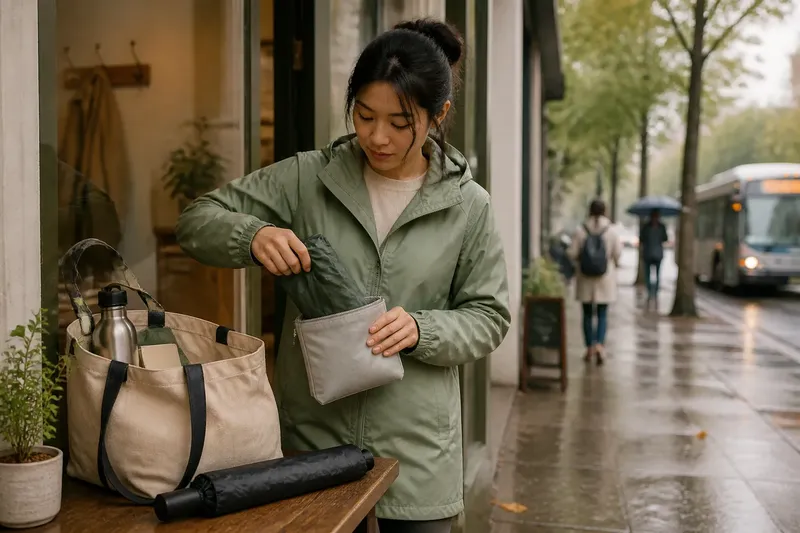
An umbrella needs room to open; a packable shell needs a place to go once you take it off. For an umbrella or packable shell, the deciding detail is often the most awkward moment on your route, not the stretch of open sidewalk.
Think about where your hands will be, how crowded the route gets, and what you’ll do with wet gear indoors. Those details make the choice clearer than comparing the items in isolation.
An umbrella suits open routes and free hands
Choose an umbrella when you can hold it comfortably, have room to open it, and expect to walk without carrying much. It covers your head and shoulders without adding a layer, which can be welcome on a mild, damp day.
A broad sidewalk, a short walk from a parked car, or an easy stroll to a café can suit an umbrella. You can close it before entering and keep it in hand rather than wearing damp clothing indoors.
But a tote, drink, and umbrella can compete for the same hand. If you’ll need to open doors, handle a transit pass, or carry purchases, decide whether you can manage those tasks without juggling.
Wind and narrow spaces can make the canopy harder to control. Keep it clear of other people, and consider where it can drip indoors: a sleeve or umbrella stand gives it a designated place.
A packable shell suits errands with busy hands
A shell leaves both hands free for groceries, luggage, a child’s hand, or a phone. That can matter more than the umbrella’s open-air coverage when the outing involves several tasks rather than an uninterrupted walk.
It also avoids opening a canopy in a doorway or on a crowded bus. If the rain stops, you can take it off, but you’ll need a place to keep the damp fabric from touching dry belongings.
A shell covers your body rather than creating a roof around you, so exposed areas can still get wet. It may also feel clammy during brisk walking. Consider your clothes underneath and whether you’ll be comfortable wearing it inside for a while.
Check the hood and cuffs before choosing it. A hood that slips or limits your side vision can be distracting near traffic, and a shell that is difficult to pull on over your planned clothes may not work well in a hurried transition.
Compare usable space, not just packed size
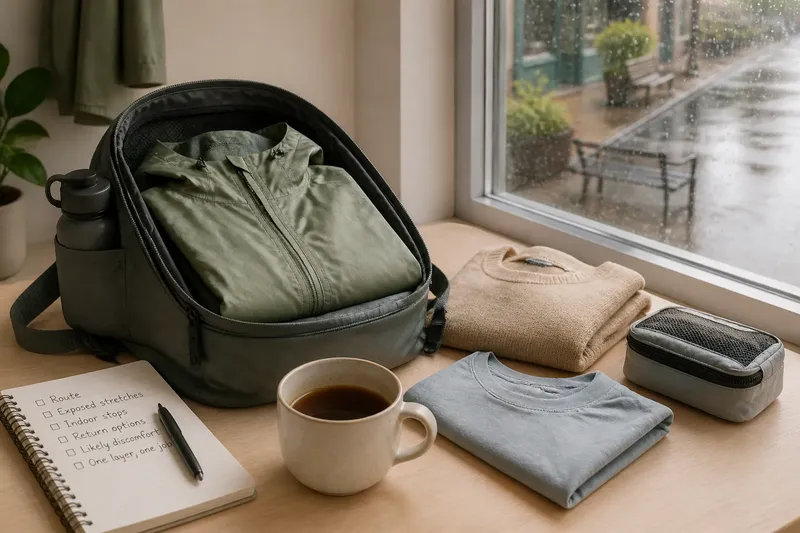
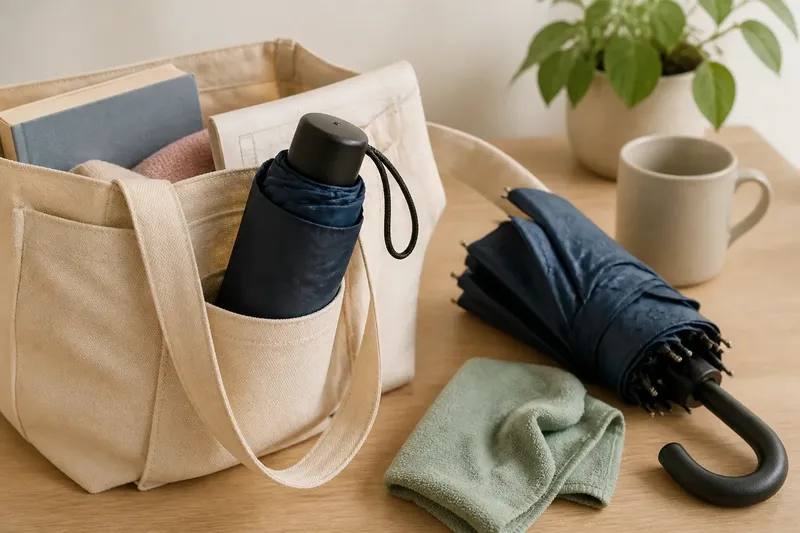
Try each item in the bag you’ll actually carry. An umbrella may fit a side pocket but occupy its full length; a folded shell may tuck into a soft corner yet leave a damp bundle beside your belongings. Access matters too: gear buried beneath lunch or a book is harder to reach when rain starts.
- Check the umbrella’s storage spot: If it fits a side pocket without displacing something you need, choose it for a route where you can hold it; otherwise, try the shell or carry the umbrella separately.
- Check the shell’s packed shape: If it fits without pressing against papers or electronics, choose it for hands-free errands; otherwise, use a separate pouch or take the umbrella if your route permits.
- Check when you’ll need access: If rain protection is needed soon after leaving, put the item near the top or in an outside pocket; if that spot is already needed for essentials, choose the option with another practical storage place.
- Check where wet gear will go: If a pouch or sleeve can keep it apart from dry contents, the packed option is manageable; if not, carry the umbrella separately or choose gear you can leave on briefly.
- Check what the item would displace: If it crowds out something essential, don’t force it into the bag; carry the umbrella in hand if that leaves a hand free, or wear the shell from the start if it feels comfortable.
- Check the bag’s wet and dry compartments: If they are genuinely separate, use them to divide damp gear from dry items; if they share one space, use a pouch or keep the wet item outside the bag.
A separate pouch can contain a damp shell, while an umbrella sleeve can limit drips. Treat the bag like a lunchbox: a divider only helps when wet and dry contents have distinct places.
Route changes can favor one option over the other
An open walk gives an umbrella room to work. Transit gates, narrow aisles, and crowded entrances favor the shell because there’s no canopy to manage. Long indoor stops raise another question: where will the damp item sit while you’re inside?
Say you’re heading to a neighborhood shop with a canvas tote, then taking a crowded bus home. Your starting point is a light load and a route with one busy boarding; you expect to carry purchases on the return. You choose a shell and put it in a reachable part of the tote with a separate pouch. At the shop, you wear it while walking, then pack it into the pouch before boarding. The expected result is that both hands remain available for the tote and bus rail, while the damp shell stays apart from dry items. If the tote has no room for the pouch, the tradeoff changes: an umbrella you can close and carry separately may be easier than crowding the bag.
For a short, open walk to a café where you can leave a closed umbrella near the entrance, the umbrella may be simpler if your hands are free. You avoid wearing a shell at the table, but you still need a suitable place for the wet canopy.
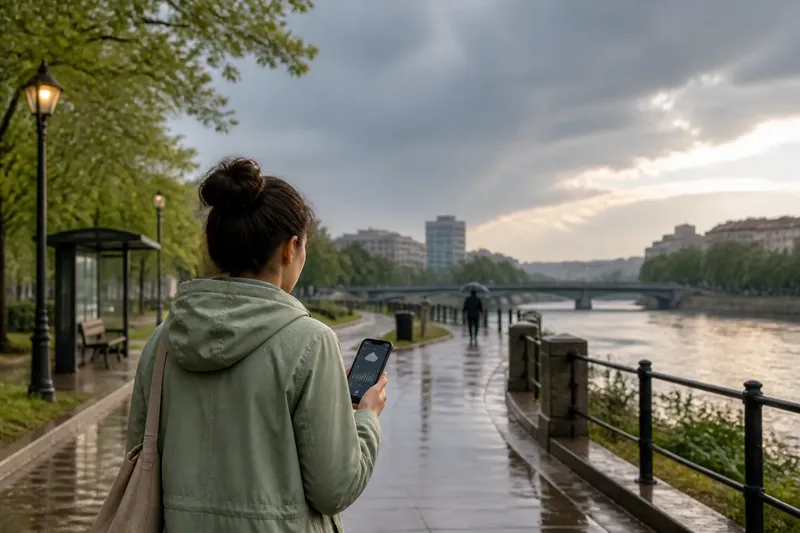
Near traffic, check that either option lets you see and move comfortably. An umbrella held too low and a hood that narrows side vision can both interfere with noticing crossings and other pedestrians.
Plan where wet gear will go indoors
Before leaving, consider the indoor part of the outing. An umbrella needs to be closed without brushing people, then kept upright or wrapped. A shell needs a place to come off if you warm up, plus a way to keep its damp surface away from the bag’s contents.
If you’ll be a guest, at a small café, or in a busy office, look for a coat hook, umbrella stand, or other suitable spot. If there isn’t one, a shell may be easier to keep on briefly or fold into a pouch. If wearing it indoors would be uncomfortable, an umbrella with a sleeve may be simpler.
At home, open the umbrella where it can drip safely and hang the shell so air can reach its folds. Follow the care label and manufacturer’s directions for cleaning and drying. Follow venue rules about bringing wet gear inside.
Which questions settle the choice?
Which is easier on public transit?
A shell is often easier in a crowded aisle because it needs no canopy clearance. An umbrella can still suit a short boarding trip if you can close it before stepping aboard and keep it contained.
Which is better when carrying shopping?
A shell leaves your hands free, which can simplify bags or parcels. An umbrella may work when your load is light and you can comfortably reserve one hand for its handle.
Can you wear a packable shell indoors?
Yes, if the room and your activity make it comfortable. If you expect to remove it, decide beforehand where the damp shell will go so it doesn’t end up against dry belongings.
Does it make sense to take both?
Take both only if each has a distinct job and neither crowds out essentials. If one option handles the route’s busiest section and has a practical indoor storage place, the second item may add clutter without solving a problem.
For an umbrella or packable shell, make the final call by looking at the busiest part of the route: check whether your hands will be occupied, whether a canopy has room, and where damp gear can go. If your tasks call for free hands, favor the shell; if the route is open and you can carry it comfortably, an umbrella may be the tidier choice.