Pack Fewer Spare Layers for Rainy Outings
Pack fewer spare layers for rainy outings by matching one backup to your route, planned stops, and likely discomfort, instead of carrying duplicate clothes.
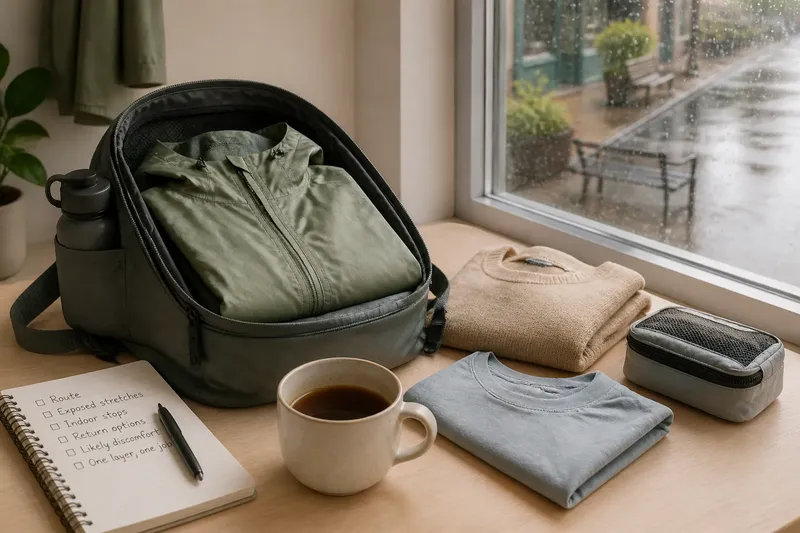
Pack fewer spare layers for rainy outings by giving every backup a separate job. A dry shirt, a warm sweater, and a rain shell can all sound sensible until they crowd your day bag, even though your route may call for only one of them.
The problem is not packing for rain; it is packing several answers to the same question. Start with the outing you actually expect, then decide whether you need protection from rain, warmth during a pause, or a dry change after getting damp.
Write down the exposed parts of your route
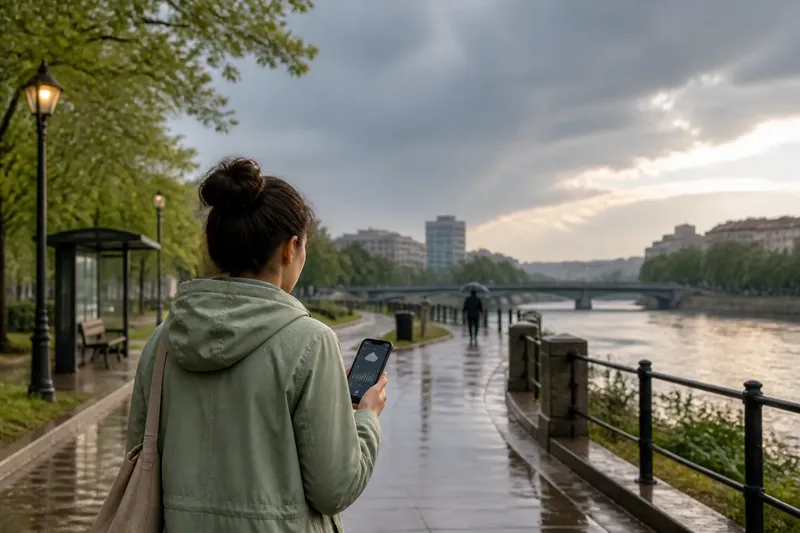
Before choosing clothes, note where you will be outside and where you can get indoors. A walk between shops with time inside each one is different from a long stretch on an open trail. The forecast can prompt a closer look at exposure, but it cannot tell you exactly when you will get wet.
Check your plan for three details:
- Observation: The route has a long exposed stretch before shelter; if so, carry one item that addresses the discomfort you expect there, or choose a different route with an indoor pause.
- Observation: The outing includes a reliable indoor stop; if so, consider leaving a spare change of clothes at home, or carry one layer if you expect to stay damp and uncomfortable afterward.
- Observation: You can return home easily if the weather turns; if so, you may leave clothing backups behind, or choose one compact layer if you will still be outside for a meaningful part of the trip.
- Observation: The plan includes a long outdoor wait; if so, consider a warm layer if you expect to feel cold while stationary, or shorten the wait by moving it indoors.
- Observation: You expect rain directly on your clothes; if so, consider a shell, or change the route to include shelter if you do not want to carry one.
- Observation: You will need to sit indoors in clothes that may be wet; if so, consider a dry top if that discomfort matters to you, or accept damp clothing for the brief visit.
These checks are not a forecast of what will happen. They help separate a real need on your route from a second garment packed only because the weather feels uncertain.
Give each spare garment a distinct job
A shell blocks rain from reaching clothing underneath. A warm layer helps when you expect to feel cool, especially during a pause. A dry top replaces clothing that is already damp. Those jobs can overlap during a long outdoor outing, but they are not automatically three separate packing requirements.
Ask of each candidate: “What specific moment would make me glad to have this?” If two items answer the same question, keep the one that best fits the route and leave the other behind. A spare layer should be like a tool in a drawer: useful for a particular task, not there just because it belongs to the category.
Say you plan to walk to a neighborhood café, stay indoors for a visit, then walk home. You expect a chance of showers, but you do not expect a long outdoor wait. Your starting choices are a shell, a spare sweater, and a dry shirt. You decide the shell addresses rain on the walk, while the sweater and shirt have no separate likely job during this short plan. You pack the shell and leave the other two at home; if the route changes to include a long exposed stop, you would reconsider a warm layer rather than automatically adding both garments.
Check whether the backup fits your bag
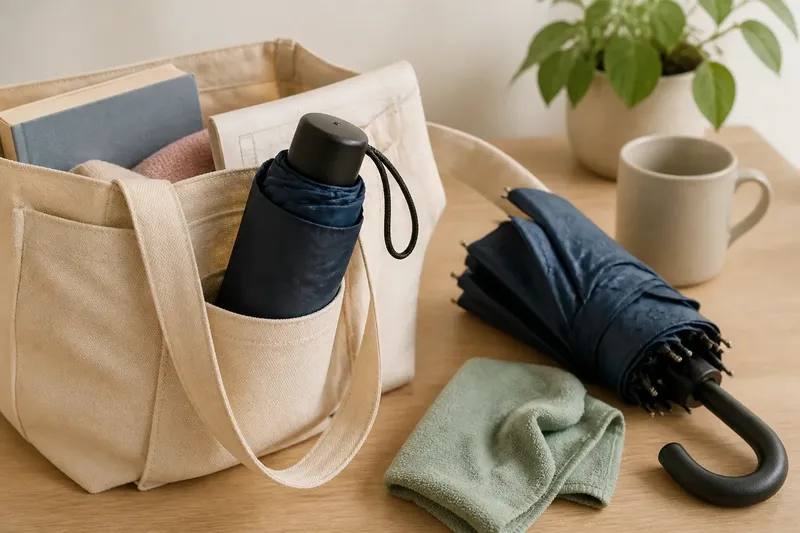
Choose clothing you can comfortably carry with your everyday essentials. Put your keys, wallet, phone, and usual items in the bag first, then add the candidate layer. If it makes the bag awkward or pushes out something you need, compare a lighter alternative or reconsider whether the route makes a backup worthwhile.
A thin shell that folds into a pocket may suit a small day bag better than a bulky jacket. A light cardigan may make more sense for an outing spent mostly indoors. Follow the garment’s care label and the maker’s instructions for packing and use.
Keep damp clothes from turning into extra baggage
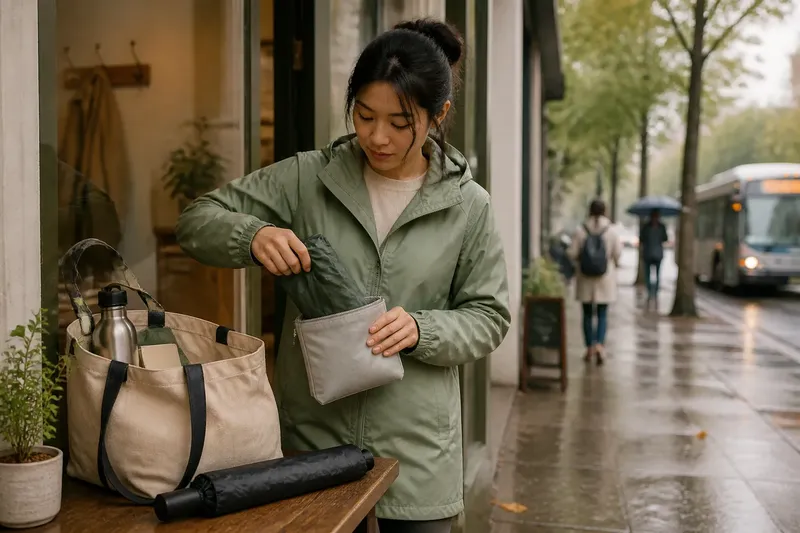
If you expect to carry a damp layer after taking it off, plan where it will go. A separate bag for wet clothing can keep other belongings from getting damp; check that your chosen bag or pouch is intended for that use. If you do not have a suitable way to contain a wet garment, you may prefer to keep it on or choose a route with a chance to dry off indoors.
This does not mean you need a second outfit for every outing. It means considering what happens after a layer has done its job, especially if you will continue carrying it.
Which spare layer fits your rainy outing?
How many spare layers should I carry?
There is no fixed number that suits every route. Choose only garments with separate jobs, and leave duplicates behind when your planned stops make them unnecessary.
Should I pack a shell or a warm layer?
Choose a shell if rain reaching your clothes is the concern; choose a warm layer if you expect to feel cool. If both problems are likely on a long exposed outing, decide which matters more or adjust the route to add shelter.
What should I do if the forecast keeps changing?
Recheck the route, time outside, and available indoor stops rather than adding a garment for every update. Change your packing decision if the outing itself changes.
Can I go without spare clothing?
For a brief outing with nearby shelter and an easy return, you may decide no clothing backup is needed. For a long exposed stretch, carry one item that addresses the discomfort you consider most likely.
Make the final choice before you leave
Set the planned outfit beside the candidate backups and name the job of each extra garment. If two spares solve the same problem, choose one; if none addresses a likely discomfort on an exposed part of the route, add one that does. Then check that it fits without displacing something you need.
For rainy outings, fewer spare layers work best when the choice follows the route rather than a stack of possible weather scenarios. If your plans change, revisit the exposed stretches and stops first. That gives you a clear reason to add a layer—or to leave the extra clothes at home.