How Folding Umbrellas Changed Everyday Rain Cover
Learn how folding umbrellas changed everyday rain cover, and choose a design that suits your route, bag, and plans for keeping a wet canopy apart.
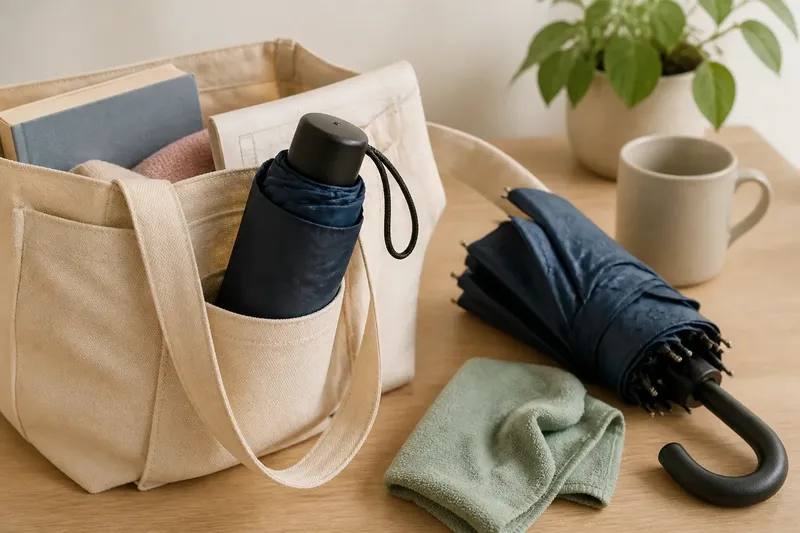
A folding umbrella lets you carry rain cover in a bag before the sky turns gray. That everyday convenience is less about a dramatic change in umbrella history than about a simple design choice: a shorter closed shape is easier to bring along between dry stretches.
Shorter when closed means easier to bring along
A long umbrella has a straightforward job. Open the canopy, hold it overhead, and keep it close when you go indoors. But while it is closed, its length can make it awkward to carry through a day of errands or set aside in a small space.
A folding design shortens the shaft and gathers the canopy when it is not in use. That makes it easier to put in a tote, backpack, or roomy coat pocket. The umbrella can be part of what you pack at home rather than an item you retrieve only after the weather looks threatening.
Think of a folding umbrella like a collapsible shopping basket: it takes less room when the job is not underway. The comparison is about storage, not strength or weather performance. Folding mechanisms vary, so the maker’s instructions remain the right source for opening and care.
The route decides which shape is useful
Compactness helps only if the umbrella fits the way you travel. A folded model may sit neatly in a backpack’s side pocket, while a long umbrella may be easier to grab for a short walk from a parked car. Consider where you will carry it, where you can put it down, and how often you expect to open it.
On a crowded bus, an umbrella tucked into a bag may leave a hand free. On a walk with little indoor storage, a long umbrella may be simpler to keep track of than something packed among other belongings. Neither shape suits every outing.
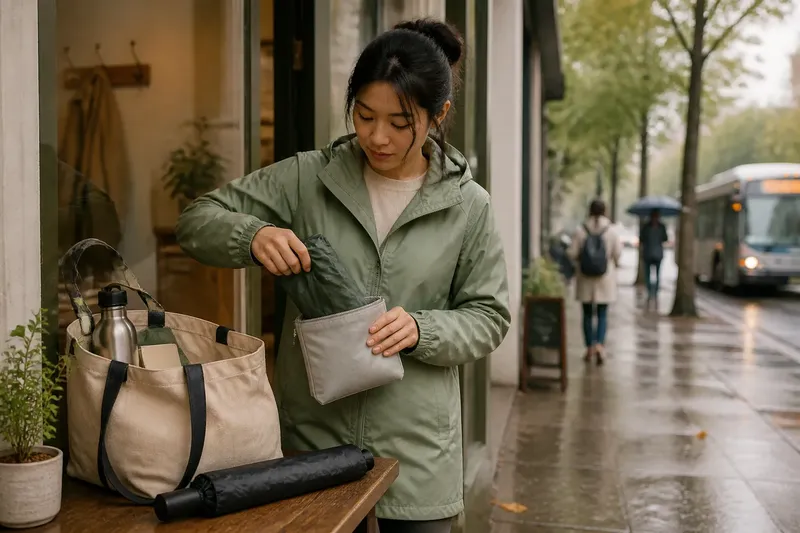
Say you are heading to an outdoor market with a canvas tote, a paperback, and a paper list. The forecast makes rain possible, and you expect to browse for a while. You check the tote’s outer pocket and find that a folded umbrella fits without pressing on the book. You choose it, then use its sleeve after a shower passes. The result is a clear place for the umbrella and less contact between damp fabric and paper, though you still need to dry the canopy when you get home.
Check these details before choosing an umbrella
- Closed length: Put the folded umbrella beside the bag you actually carry. If it fits without forcing the zipper or crowding fragile items, it is a practical match; if not, choose a smaller model or plan to carry a long umbrella separately.
- Opening space: Consider where you usually open it. If you can stand clear and operate it comfortably, the mechanism suits that route; if not, choose a design you can manage in the space available or wait until you reach an open area.
- Handle shape: Hold the umbrella before deciding. If the handle sits securely in your hand, it is comfortable to carry; if it slips or catches on your bag, consider another handle or a bag pocket that keeps it contained.
- Canopy coverage: Compare the canopy with the area you want sheltered, such as your head and shoulders. If that coverage suits the outing, the size is reasonable; if not, consider a larger canopy or another form of rain protection.
- Sleeve or case: Check whether the closed umbrella has a case that contains damp fabric. If it does, use it to separate the canopy from belongings; if it does not, carry a suitable separate pouch or keep the umbrella outside the main compartment.
- Storage at your destination: Think about where the umbrella can go once you arrive. If there is a safe place to set it aside, a long model may be manageable; if not, favor a design that fits your bag or can be kept close without blocking the route.
Which umbrella questions matter on an ordinary outing?
Why are folding umbrellas easier to carry?
Their shafts and canopies fold into a shorter shape, which can fit more easily in a bag. That means you can bring rain cover along without carrying a long object in your hand throughout the dry part of an outing.
Is a folding umbrella always the better choice?
No. A compact model is easier to stow, while a long umbrella may suit a direct trip when you expect to use it soon and have somewhere to put it down. The bag, route, and available storage all affect the choice.
How should I carry a wet folding umbrella?
Close it according to the maker’s instructions and use its sleeve or a separate pouch to keep damp fabric away from papers and electronics. When you have a suitable place, open it to dry before returning it to a bag.
What should I check before putting one in a bag?
Check that the umbrella is closed and that its case contains any damp fabric. If the canopy is wet and there is no suitable sleeve, keep it outside the main compartment until you can separate it from belongings.
Give a damp canopy room to dry
A folding umbrella is easy to tuck away, but damp fabric can transfer moisture to nearby items. A sleeve or pouch helps contain contact during the trip; it is not a substitute for drying the umbrella when you have a suitable place to do so.
Before putting the umbrella back in your bag, check whether the canopy is dry. If it is still damp, keep it in its case and apart from items that moisture could damage, then let it dry open when practical. That small habit helps the portable design remain useful from one outing to the next.
For everyday rain cover, folding umbrellas changed the decision from “Do I want to carry this by hand?” to “Can it fit in the bag I already have?” Check that fit, the opening space on your route, and your plan for a wet canopy; those details make portability useful rather than merely compact.